
Everything you need to know about corporate learning, learning platforms and e-learning
In our FAQs, you’ll find answers to the most important questions about modern professional development, e-learning, learning platforms and Learning & Development.
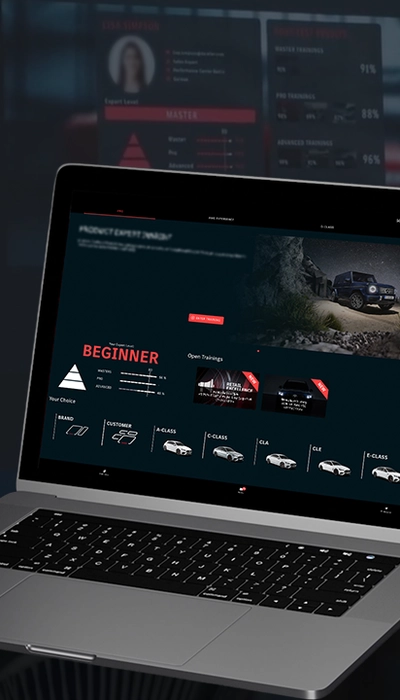
Corporate Learning & Learning & Development
Why companies should invest in further training.
1. What are the benefits of corporate learning?
Corporate learning boosts productivity, motivation and competitiveness. The benefits at a glance:
- Improved performance through practical training.
- Rapid onboarding and lower staff turnover.
- Continuous skills development, covering both technical and soft skills.
- Adaptability thanks to personalised learning pathways and AI.
- Social learning promotes innovation and the exchange of knowledge.
- Employee retention through targeted development opportunities.
Conclusion: Companies that invest in learning and development ensure that their staff remain motivated in the long term and achieve sustainable success.
2. Why is Learning & Development important for organisations?
Learning & Development (L&D) helps organisations to continuously develop their staff, build their skills and remain competitive in the long term. Through targeted training programmes, specialist knowledge, soft skills and product knowledge can be continuously enhanced.
Businesses benefit from:
- increased productivity and performance
- faster onboarding of new staff
- lower staff turnover and greater staff retention
- faster roll-out of new products and processes
- sustainable knowledge development through modern learning methods
- measurable learning outcomes through reporting and KPIs
The combination of the stg/Learn learning experience platform and the pedagogical expertise of the salestech Academy gives rise to bespoke learning and development programmes that embed learning within the organisation for the long term.
3. What are the benefits of online training courses?
Online training courses, such as those available on stg/Learn, offer flexibility, scalability and measurable learning outcomes.
The benefits:
- Flexibility in terms of time and location for learners.
- Rapid scaling of content for large target audiences and ease of translation.
- Cost-effectiveness through reduced travel and downtime.
- Interactive formats such as videos, link layers, gamification and social learning.
- Personalised learning pathways thanks to AI and learning experience platforms.
- Easy measurement of success through digital analytics.
Online training courses increase reach, reduce costs and improve learning outcomes – a must for modern learning and development.
4. How do you measure the success of e-learning?
The success of e-learning can be measured using various learning KPIs and business metrics. Which metrics are relevant depends on the objectives of the training programme.
Commonly used KPIs are:
- Training completion rate
- Participation rate
- Learning progress
- Test results and knowledge gain
- Usage activity
- Time taken to complete the training
- Learner feedback
- Application of what has been learnt in day-to-day work
Furthermore, organisations can assess the impact of e-learning on key performance indicators such as productivity, sales performance, error rates, onboarding time and staff retention.
Modern learning experience platforms support this with reporting and analysis functions that provide transparency into learning outcomes and highlight areas for improvement.
5. Why is it worth choosing a full-service partner for e-learning and corporate learning?
A full-service e-learning partner supports companies throughout the entire learning and development process – from strategy and training design, through content creation, to technical implementation and performance measurement. This results in learning programmes that are pedagogically sound, technically well-executed and successful in the long term.
With the salestech Academy, companies receive all services from a single source: pedagogical consultancy, content production, video production, translations, learning concepts and our learning experience platform, stg/Learn. This reduces the need for coordination, speeds up implementation and ensures modern professional development with measurable added value.
Sales Training & Onboarding
Training for sales teams and new staff.
1. What are the benefits of learning in sales?
Targeted training in sales boosts turnover, product knowledge and customer loyalty. Studies show:
- Improved sales performance through practical, role-based training.
- Faster onboarding of new staff and lower staff turnover.
- Greater motivation through soft skills development and a sense of achievement.
- Better product knowledge for more persuasive sales consultations.
- Social learning and informal learning promote teamwork and knowledge transfer.
- Personalised learning pathways and adaptive technologies enhance relevance and learning success.
With a modern learning experience platform and targeted learning and development strategies, sales teams achieve measurably better results and are more motivated in their work.
2. How do you design effective sales training programmes?
Successful sales training programmes impart product knowledge, sales strategies and soft skills in a practical and immediately applicable way. Modern methods such as micro-learning, blended learning, social learning and gamification boost motivation and ensure long-term learning success.
With stg/Learn, sales teams benefit from personalised learning pathways, AI-powered recommendations, multilingual training courses, gamification and detailed reporting. Combined with the pedagogical expertise of the salestech Academy, this results in bespoke sales training programmes that accelerate onboarding, embed knowledge for the long term and improve sales performance.
3. How can we ensure the successful onboarding of new staff?
Successful onboarding quickly equips new employees with the necessary knowledge about the company, its processes and products. Digital learning formats such as micro-learning, blended learning, social learning and personalised learning pathways ensure that new employees become productive more quickly and develop long-term loyalty to the company.
With stg/Learn, you can combine structured onboarding programmes, automated learning journeys, multilingual content and gamification. In collaboration with the salestech Academy, we develop bespoke onboarding concepts with measurable learning outcomes.
4. Why is onboarding important for sales staff?
A structured sales onboarding programme shortens the induction period for new sales staff and ensures that product knowledge, sales processes and sales techniques are taught more quickly. This leads to increased productivity, higher conversion rates and greater long-term staff retention.
With stg/Learn, companies can utilise personalised learning pathways, multilingual content, gamification, AI-powered learning recommendations, as well as reporting and KPI analysis. The salestech Academy develops bespoke sales training programmes and onboarding concepts that quickly prepare staff for their roles and promote sustainable sales success.
Learning platform, Learning Management System (LMS) & Learning Experience Platform (LXP)
Everything to do with (digital) learning platforms.
1. What is a learning platform?
A learning platform is a digital solution that enables organisations to centrally provide, organise and evaluate online training, e-learning courses and other learning content. It forms the basis for modern corporate learning and learning and development, and supports organisations in providing efficient further training for their staff.
Modern learning platforms enable, amongst other things, personalised learning pathways, mobile learning, progress assessments, certificates, reporting and the centralised management of all training initiatives. This allows learning processes to be designed flexibly and learning outcomes to be improved in the long term.
Depending on its range of functions, a learning platform may be structured as a traditional Learning Management System (LMS) or as a modern Learning Experience Platform (LXP).
2. What is a Learning Management System (LMS)?
A Learning Management System (LMS) is a software solution for managing and organising training sessions, e-learning courses and continuing professional development programmes. Companies can use it to deliver learning content, manage users, conduct compulsory training, and document learning progress and certifications.
The key features of a modern LMS include:
- Centralised management of learning content
- Personalised learning pathways
- Tests and certificates
- Automated learning processes
- Reporting and KPI analysis
- Integration with existing business systems
An LMS helps companies to organise staff training efficiently and to measure the success of professional development initiatives.
3. What is a Learning Experience Platform (LXP)?
A Learning Experience Platform (LXP) goes beyond the functions of a traditional LMS. It puts learners at the centre and creates motivating, personalised learning experiences. Features such as micro-learning, social learning, blended learning, gamification, AI-powered recommendations and personalised learning journeys promote sustainable knowledge transfer and greater motivation to learn.
With stg/Learn, organisations gain a modern Learning Experience Platform (LXP) that makes digital professional development engaging and flexible. Thanks to intuitive user guidance, a variety of learning formats, flexible content creation and a motivating Netflix-style interface, it delivers learning experiences that increase participation rates and improve learning outcomes in the long term.
4. What is the difference between a learning platform, an LMS and a learning experience platform (LXP)? (LXP vs. LMS)
The terms ‘learning platform’, ‘Learning Management System’ (LMS) and ‘Learning Experience Platform’ (LXP) are often used interchangeably, but they differ in their focus.
A learning platform is the umbrella term for digital systems that organisations use to deliver and organise training programmes.
A Learning Management System (LMS) focuses on the management of training courses, mandatory training and learning progress. The emphasis is on organisation, administration, compliance and reporting.
A Learning Experience Platform (LXP) extends these functions to include a modern learning experience. Through personalised learning paths, artificial intelligence, gamification, social learning, mobile learning and interactive content, learning becomes more personalised, motivating and sustainable.
In summary:
- Learning platform = umbrella term for digital learning systems.
- LMS = focus on management, organisation, testing, as well as certificates and reporting for training courses.
- LXP = Focus on personalised learning experiences, motivation, social learning, gamification and sustainable learning success.
stg/Learn combines the strengths of both worlds: the platform offers all the functions of a modern Learning Management System and complements these with the advantages of a Learning Experience Platform. This creates individual learning environments with personalised learning paths, mobile learning, social learning, gamification, as well as comprehensive reporting and sustainable learning success.
5. What is an all-in-one learning platform?
An all-in-one learning platform combines all the key functions for modern corporate learning in a single solution. e-learning, live streams, face-to-face training, knowledge management and blended learning are created, managed and evaluated centrally – without the need for siloed solutions.
The benefits at a glance:
- One platform for all learning formats
- Fewer software packages, lower costs, easier to manage
- Integrated authoring tool for training creation
- Centralised reporting with KPIs
With stg/Learn, organisations gain a modern all-in-one learning experience platform that combines an authoring tool, learning management, event management and live streams in a single centralised environment. This enables training courses to be created, delivered and evaluated efficiently – including live chat, multilingual support and comprehensive reporting across all learning formats.
6. How much does a learning platform for businesses cost?
The cost of a learning platform depends on various factors. These include, amongst other things, the number of users, the required range of functions, integrations, support, and additional services such as content creation or customisation.
Many providers operate on monthly or annual licensing models. Depending on requirements, there may also be costs associated with implementation, training or bespoke development.
When selecting a learning platform, therefore, it is important to consider not only the price but, above all, the long-term benefits. Aspects such as user-friendliness, scalability, reporting, data protection, multilingual support and the support of modern learning methods play an important role in the decision-making process.
Training design & e-learning development
From the initial idea to the finished training programme.
1. How do you create effective staff training programmes?
Successful staff training programmes combine clear learning objectives with practical content and modern learning methods such as micro-learning, social learning, blended learning and skills-based learning. An intuitive Learning Experience Platform (LXP) helps to deliver learning content flexibly, measure learning progress and offer personalised learning pathways.
As a full-service learning partner, the salestech Academy supports companies every step of the way – from training strategy and instructional design right through to content creation. Our learning experience platform, stg/Learn, enables the creation of interactive training programmes that sustainably boost motivation, learning success and knowledge transfer.
2. How do you develop a successful e-learning programme?
A successful e-learning concept begins with a clear analysis of the target audience, the learning objectives and the organisation’s requirements. Suitable learning formats – such as micro-learning, blended learning, social learning, gamification or skills-based learning – are then combined in a pedagogically sound manner. A modern Learning Experience Platform (LXP) ensures that content is delivered in a personalised, interactive and measurable way.
As a full-service learning partner, the salestech Academy supports companies from the initial idea right through to the finished training programme. Together, we develop bespoke e-learning concepts, create high-quality educational content and implement it on our Learning Experience Platform, stg/Learn.
3. How do you create professional e-learning content?
Professional e-learning content combines subject-matter expertise with modern teaching methods, interactive learning formats and appealing design. Videos, animations, quizzes, simulations, educational games and practical exercises ensure that knowledge is conveyed in an accessible way and retained in the long term.
The salestech Academy handles the creation of digital learning content – from conception through storyboarding and design right through to the production of interactive training courses. With stg/Learn, content can be created flexibly, updated at any time and delivered in a wide variety of formats. AI-powered video transcriptions, multilingual content and personalised learning paths make content creation efficient and further training even more effective.
4. How do you design interactive product training sessions?
Successful interactive product training courses combine theoretical knowledge with practical application scenarios and interactive learning formats. Through blended learning, micro-learning, gamification and social learning, products are not merely explained, but brought to life.
With stg/Learn, videos, interactive content, knowledge checks, challenges and personalised learning journeys can be flexibly combined. In collaboration with the salestech Academy, companies develop product training programmes that impart knowledge in a way that lasts and successfully support the market launch of new products.
A key component of this is the Link-Layer-Technologie:In just a few minutes, it transforms static training content into dynamic, interactive learning experiences – without the need for complex production.
Modern learning methods
Methods for motivating and sustainable continuing professional development.
a. Blended Learning
1. What is blended learning?
Blended learning combines online training, face-to-face training and virtual learning formats into a holistic learning concept. This allows the advantages of different learning methods to be optimally combined, leading to lasting learning outcomes.
With stg/Learn, organisations can centrally organise all learning formats – from documents and videos, through interactive e-learning courses and live streams, to face-to-face training. Personalised learning pathways, automated learning processes and insightful reporting create a flexible and measurable learning environment. The platform is complemented by the pedagogical expertise of the salestech Academy, which supports companies in designing effective blended learning programmes.
2. What are the benefits of blended learning for businesses?
Blended learning combines the face-to-face interaction of classroom-based training with the flexibility of digital learning formats. Organisations benefit from increased motivation to learn, the long-term retention of knowledge and more efficient staff development. With stg/Learn and the pedagogical expertise of the salestech Academy, blended learning programmes are developed that can be tailored to individual organisational objectives and target groups.
3. How can blended learning be successfully implemented?
A thorough understanding of the learning content, the organisation and the capabilities of the learning platform is a prerequisite for successful blended learning. This is followed by the definition of clear learning objectives and a strategy for the appropriate combination of online training, face-to-face training, micro-learning, live streams and social learning. The learning formats should be optimally tailored to the target audience, the content and the organisation’s objectives.
As a full-service learning partner, the salestech Academy supports companies throughout the entire process – from analysis, through instructional design and content creation, to technical implementation on stg/Learn. By combining its own learning experience platform, instructional expertise and practical content, the Academy creates bespoke learning journeys featuring personalised learning paths, measurable learning outcomes and sustainable knowledge transfer.
b. Motivation & Engagement
1. How do I motivate staff to take part in online training?
Employees are more likely to take part in training if it is relevant, easily accessible and designed to be engaging. Elements such as gamification, micro-learning, social learning and skills-based learning promote engagement and learning success.
2. How can we increase participation rates in e-learning and corporate learning?
Higher click-through rates and greater participation in training courses can be achieved through an appealing design of the learning platform, well-thought-out and effective gamification, relevant content and personalised learning experiences, right through to micro-learning.
stg/Learn boosts these figures in several ways: with its attractive Netflix-style visuals, a wide range of translation options for international teams and AI-based personalisation, training courses are tailored precisely to learners’ needs. This is complemented by the learning experts at salestech Academy, who create perfectly tailored, motivating content – for maximum reach and lasting learning success.
c. Gamification
1. What is gamification?
Gamification in learning uses game-like elements such as levels, leaderboards and rewards to boost motivation and learning outcomes. As a full-service learning provider, we integrate gamification into your training programmes in a targeted manner – using our own learning platform, our pedagogical expertise and bespoke concepts. In this way, we create learning experiences that motivate, are enjoyable and deliver measurable results.
2. How can gamification be used in learning?
Gamification in learning makes training interactive, motivating and measurable – through elements such as local and global leaderboards that allow learners to compare their performance within their team or across the organisation, levelling systems that visualise progress, and skill-based learning badges that recognise specific competencies.
As a full-service learning provider, we deploy gamification strategically across a wide range of scenarios – from company-wide development programmes to highly specialised sales training. With our own learning platform and years of experience in implementation, we create bespoke concepts that deliver measurable results and sustainably boost motivation to learn.
d. Social Learning
1. What is social learning?
Social learning is a learning method in which employees learn through interaction with others. Discussions, peer feedback, group tasks and collaborative problem-solving promote the transfer of knowledge and ensure that the content is retained more effectively.
stg/Learn actively supports social learning: learners can rate content and view other participants’ ratings, exchange ideas via a noticeboard, share their achievements or motivate one another. The live chat feature in livestreams also enables direct interaction with trainers and other participants in real time. Hier mehr dazu erfahren
As a full-service learning partner, the salestech Academy integrates social learning concepts into your training strategy in a targeted manner. This creates interactive learning environments that foster collaboration, ensure knowledge is retained in the long term and boost motivation to learn.
2. What are the benefits of social learning?
Social learning improves the exchange of knowledge, boosts motivation to learn and strengthens collaboration within the organisation. Employees benefit from sharing experiences with colleagues, whilst organisations secure knowledge in the long term and integrate it more quickly into day-to-day work.
The key benefits:
- Greater motivation through collaborative learning
- Sustainable knowledge transfer
- Promotion of teamwork and innovation
- Faster skills development
- Greater interaction in online training and blended learning programmes
- Measurable learning outcomes through reporting and KPIs
With stg/Learn, social learning elements can be seamlessly integrated into training programmes – whether online or face-to-face – and combined with other learning formats.
e. Micro Learning / Micro-learning
1. What is micro-learning?
Micro-learning delivers knowledge in short, focused learning modules that can be flexibly integrated into the working day. Whether for a quick refresher, skills-based learning, product training or as part of a blended learning approach – micro-learning enables continuous learning in small, easily understandable steps.
Micro-learning is particularly effective when online training courses are available on various devices. This allows staff to access learning content anytime, anywhere – whether on a desktop, tablet or smartphone. Mobile learning increases flexibility and promotes continuous professional development as part of everyday working life.
The salestech Academy supports companies in the design, creation and implementation of bespoke micro-learning concepts. With our Learning Experience Platform, pedagogical expertise and practical content, we create learning experiences that motivate and enable lasting learning success.
2. What are the benefits of micro-learning?
Micro-learning boosts motivation to learn, reduces the time required for professional development and improves knowledge retention. Short learning modules can be easily integrated into the daily work routine and promote long-term knowledge retention.
The key benefits:
- Learning in just a few minutes
- Mobile learning via the native app
- Higher completion and participation rates
- Sustainable knowledge transfer through regular revision
- Ideal for just-in-time learning
- Rapid updating of learning content
- Measurable learning outcomes through KPIs and reporting
With stg/Learn, micro-learning content can be flexibly created, managed and combined with other learning formats. Thanks to the stg/Learn native app, employees can access learning content anytime, anywhere on their smartphone or tablet.
3. How does AI support micro-learning?
Artificial intelligence makes micro-learning even more effective by tailoring learning content to each employee’s level of knowledge, role and learning behaviour. Personalised learning pathways, intelligent recommendations and adaptive content ensure that every learner receives exactly the content that is relevant to them at the right time.
The salestech Academy supports companies in developing AI-powered learning concepts. This results in motivating learning experiences with personalised learning pathways and measurable added value for both companies and learners.
f. Other modern learning methods
1. What is skill-based learning?
Skill-based learning is an approach to learning that focuses on imparting specific skills and competences that employees need in their day-to-day work. Rather than imparting purely theoretical knowledge, the focus is on developing skills relevant to practical work.
Through personalised learning pathways, micro-learning and regular progress reviews, organisations can develop skills in a targeted manner and make learning outcomes measurable. Particularly in sales, product training and leadership development, skill-based learning ensures faster learning outcomes and improved performance.
2. Was ist Just-in-Time Learning?
Just-in-time learning means that learning content is provided exactly when it is needed. Employees receive tailored information directly as part of their day-to-day work – for example, before a meeting with a client, a product presentation or a new task.
Short learning modules, videos or knowledge databases enable rapid knowledge transfer and reduce the time spent searching for information. Particularly when combined with mobile learning and micro-learning, just-in-time learning supports productive and practical learning.
3. What is adaptive learning?
Adaptive learning automatically tailors learning content to each employee’s level of knowledge, role and learning progress. With the help of artificial intelligence (AI) and learning analytics, personalised learning pathways are created that avoid over- or under-challenging learners.
Adaptive learning boosts motivation, improves learning outcomes and ensures that each person receives exactly the content they need for their personal development.
Artificial Intelligence in Corporate Learning
AI in continuing professional development.
1. How can artificial intelligence (AI) be used in learning?
Artificial intelligence (AI) makes digital learning more personalised and efficient. Learning content can be automatically tailored to employees’ knowledge levels, roles or learning behaviours. Personalised learning pathways, intelligent recommendations and automated assessments boost motivation and learning success.
The salestech Academy supports companies in developing AI-powered learning concepts. In collaboration with the stg/Learn Learning Experience Platform, modern training programmes are created that deliver measurable added value for both companies and learners.
2. What benefits does AI offer in a learning experience platform?
AI helps companies make learning processes more efficient and deliver content more quickly. Modern learning experience platforms can, for example, automate learning recommendations, analyse learning progress and deliver personalised content.
With stg/Learn, organisations also benefit from intelligent AI features such as automatic video transcription. This makes it possible to search through video content more quickly, create subtitles and process learning content more easily. This saves time in content creation, improves accessibility and makes knowledge easier to find within the learning platform.
3. How does AI support the creation of e-learning content?
Artificial intelligence significantly speeds up the creation and updating of digital learning content. For example, it assists with the creation of texts, translations, quiz questions, summaries and personalised learning content.
In stg/Learn, for instance, videos can also be transcribed using AI. This generates subtitles and searchable content, which improves accessibility and facilitates the reuse of knowledge. AI also helps to update content more quickly and deliver it more efficiently to different target groups.
Combined with the pedagogical expertise of the salestech Academy, this results in high-quality e-learning content that is academically sound, modern in design and optimally tailored to the needs of learners.
4. How does AI support personalised learning pathways?
Artificial intelligence (AI) analyses learning behaviour, knowledge levels and learning progress, and can use this information to create personalised learning pathways. Employees automatically receive tailored learning recommendations and relevant content that is optimally tailored to their role, skills and learning objectives.
This makes continuing professional development more personalised, more efficient and more motivating. Organisations benefit from higher completion rates, more sustainable learning outcomes and targeted skills development.
You can find out more in our white paper on the use of AI in learning experience platforms.